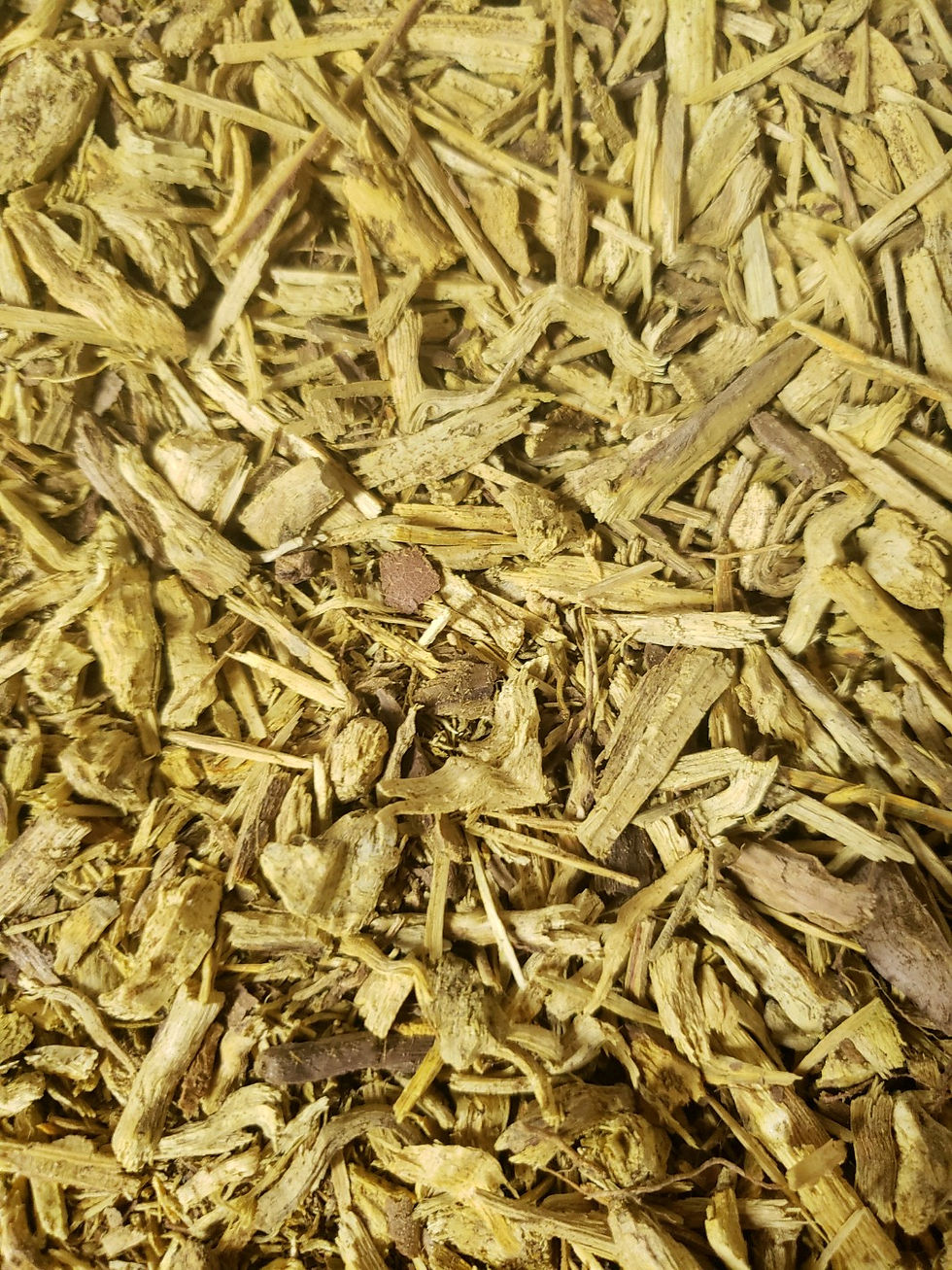
Rhubarb Root (Dried)
Rhubarb Root (Rheum rhabarbarum)
Rhubarb is such a wonderful springtime plant. One of the first foods to come up in the cool spring weather. We have quite a large patch of Rhubarb that we and our neighbors enjoy. It's a nice time to visit and catch up on what happened over the winter, as we harvest. Today we will be talking about the root, not the stalks. The roots and underground stem (rhizome) are used to make medicine. In Chinese Medicine rhubarb Root is used as an antibacterial, anti-inflammatory, anti-fibrotic, and anti-cancer. We also use this root in our Essiac Tea Blend.
Rhubarb is used primarily for digestive complaints including constipation, diarrhea, heartburn, stomach pain, gastrointestinal (GI) bleeding, and preparation for certain GI diagnostic procedures. Some people use rhubarb so they have to strain less during bowel movements; this reduces pain from hemorrhoids or tears in the skin lining the anal canal.
Medicinal Benefits: Rhubarb has been valued for its medicinal properties for centuries, especially in traditional Chinese medicine. The roots are primarily used for their strong laxative effects, containing anthraquinones like emodin and rhein. Beyond this, rhubarb root is explored for its anti-inflammatory and anticancer properties, thanks to its antioxidant and phytochemical richness. It's also being studied for lowering cholesterol and improving digestive health. Importantly, the leaves are toxic and should not be eaten, as they contain oxalic acid and anthrone glycosides, which can be harmful if ingested.